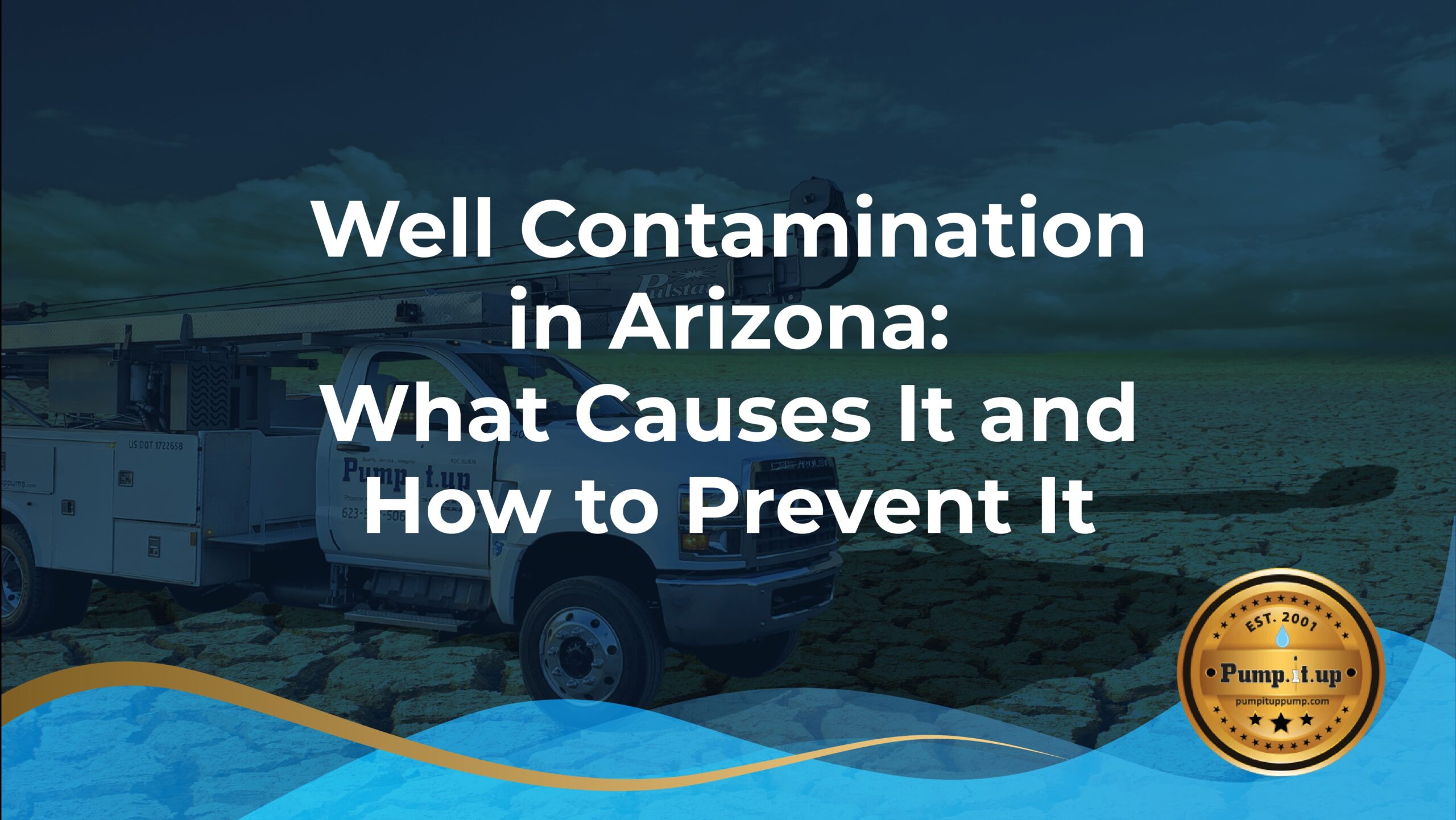
Well contamination in Arizona can result from naturally occurring minerals, failing septic systems, agricultural runoff, flooding, and damaged well components.
Preventing contamination starts with regular water testing, proper well maintenance, and reducing potential pollution sources around your property.
Taking proactive steps can help protect your drinking water and reduce the risk of costly water quality problems.
The Arizona Department of Environmental Quality reports that roughly 300,000 or more Arizona residents rely on private domestic wells for their drinking water, which are not regulated under the EPA’s Safe Drinking Water Act like public water systems are.
That means the responsibility for monitoring water quality falls largely on the well owner.
While some contaminants can cause noticeable changes in water, others may be present without affecting its appearance, taste, or smell.
Understanding both the risks and practical management strategies is essential for protecting your water supply.
What Causes Well Contamination in Arizona?
Understanding the source of contamination is the first step toward protecting your water supply.
In Arizona, contamination can come from both natural conditions and human activities.
Naturally Occurring Groundwater Contaminants
Arizona’s geology contains minerals and elements that can dissolve in groundwater over time.
Arsenic and fluoride are among the most common concerns in certain regions of the state.
These substances enter the groundwater naturally and can remain undetected because they typically do not affect the water’s taste, smell, or appearance.
Human-Caused Contamination Sources
Human activity can introduce contaminants into groundwater when pollutants move below the surface.
Chemicals that can eventually reach groundwater include:
- Fertilizers
- Pesticides
- Fuel
- Solvents
Poor storage, handling, or application allows these chemicals to easily reach groundwater.
Septic system leaks can also release bacteria, viruses, and nitrates into the surrounding soil.
Well Construction Deficiencies
Cracked casings, damaged caps, poor sealing, or improperly abandoned wells can create direct entry points for contaminants.
Even a small structural issue can compromise the quality of your water if it allows polluted surface water to enter the well.
How Can You Tell if Your Well Water Is Contaminated?
Well contamination is not always obvious, which is why relying on appearance alone can be misleading.
Some changes are noticeable, while others remain completely hidden without testing.
Common visible changes may include:
- Cloudiness
- Sediment presence
- Unusual discoloration
Taste and odor changes are another early warning sign.
These shifts often reflect changes in mineral balance or bacterial activity in the water source.
You may notice:
- Metallic taste
- Sulfur-like smell
- Unusual bitterness
In other cases, contamination shows up indirectly through household use.
Over time, water quality issues can affect plumbing systems and fixtures even when the water appears normal.
Common household indicators include:
- Staining on sinks and tubs
- Mineral buildup on fixtures
- Frequent plumbing wear
It is also important to understand that serious contamination may produce no visible or sensory changes at all.
Certain substances remain undetectable without proper testing, which is why routine analysis is essential for well water protection.
At Pump It Up, Pump Service, Inc., you get support that helps you catch these hidden issues early through reliable testing and inspections before they affect your water.
How Often Should Arizona Homeowners Test Their Well Water?
Test your well at least annually.
It builds a water quality record over time, making gradual changes easier to detect.
Core annual tests usually include:
- Bacteria levels
- Nitrate concentration
- General water quality
Preventing water pollution in your well also includes testing when environmental changes occur near your property.
Arizona’s caliche soils mean surface disturbances reach groundwater faster than in other states.
Situations that require immediate testing include:
- Flooding events
- Nearby construction
- Well repairs
In some areas of Arizona, additional testing is necessary due to local groundwater composition.
Your county and well depth are crucial factors for Arizona groundwater safety that general guidelines may not fully account for.
Regional considerations often include:
- Arsenic screening
- Total dissolved solids
- Mineral concentration checks
For Maricopa, Pinal, and Yavapai County residents, arsenic screening should be included in every testing cycle.
For northern Arizona wells, add uranium to your panel.
What to Do if Your Well Water Tests Positive for Contamination
When contamination is detected, stop using the water for drinking or cooking immediately.
This reduces exposure while the situation is evaluated.
Next, identify the source, whether it is:
- Surface intrusion
- Septic failure
- Natural groundwater composition
Without finding the cause, any fix will only be temporary.
Once the source is confirmed, match your treatment to the specific contaminant.
Bacterial issues require disinfection, chemical contaminants need filtration, and physical entry points require structural repairs.
The right solution depends entirely on the specific contaminants you are dealing with.
Frequently Asked Questions
Does Boiling Water Make Contaminated Well Water Safe?
Boiling water can kill bacteria and some microorganisms, but it does not remove chemical contaminants.
Substances such as arsenic, nitrates, and dissolved minerals remain in the water even after boiling.
If these are present, a specific filtration or treatment system is required based on testing results.
Can a Newly Drilled Well Still Be Contaminated?
A newly drilled well can intersect a contaminated aquifer zone, especially in areas with documented arsenic or PFAS plumes.
Drilling depth and casing integrity reduce surface contamination risk.
However, they do not filter out naturally occurring or legacy chemicals already present in the groundwater layer being tapped
What Contamination Prevention Methods Work Best for Arizona Wells?
The most effective contamination prevention methods combine physical upgrades and routine maintenance.
Key steps include:
- Monsoon-rated locking well cap installation
- Septic system pumping every three to five years
- Wellhead soil regrading for proper drainage
- Nearby risk mapping using ADEQ’s ECHO database
No single measure is sufficient on its own.
Layering these steps together gives your well system consistent, long-term protection.
Safeguard Your Well Water Today
Well contamination in Arizona is an active risk, not a distant one.
Your well has no regulatory protection and no monitoring agency watching on your behalf.
Test it, maintain it, and protect it today.
At Pump It Up, Pump Service, Inc., we have protected Arizona homeowners’ water supply since 2001, providing services like water testing, inspections, rehabilitation, and remote monitoring.
As a family-owned company serving Greater Phoenix and across Arizona, we bring over two decades of expertise built on honesty and excellence.
Our sister company, Empire Pump, has delivered well water solutions since 1946.
Reach out today for a free well water testing quote.
Need Well Pump Services in Arizona?
Trust Pump It Up Pump Services, Inc. for professional well pump services across Arizona. Our experienced team delivers reliable, efficient solutions to ensure proper water flow and long-lasting performance for your well system.
Call 623-582-5069 or request service online today!
Pump It Up Pump Service, Inc. provides professional well pump services, water system solutions, and reliable repairs for residential and commercial properties. Known for dependable service and honest pricing, their team keeps water systems running efficiently year-round. Request service now.